
Calm After the Holidays: Sensory Tools That Help Reset Overstimulated Kids
If your child still feels overstimulated after the holidays, you’re not alone. In this gentle, honest post, I share why January can feel harder than expected and the sensory tools that have helped our family reset after a busy season.
1/24/20263 min read

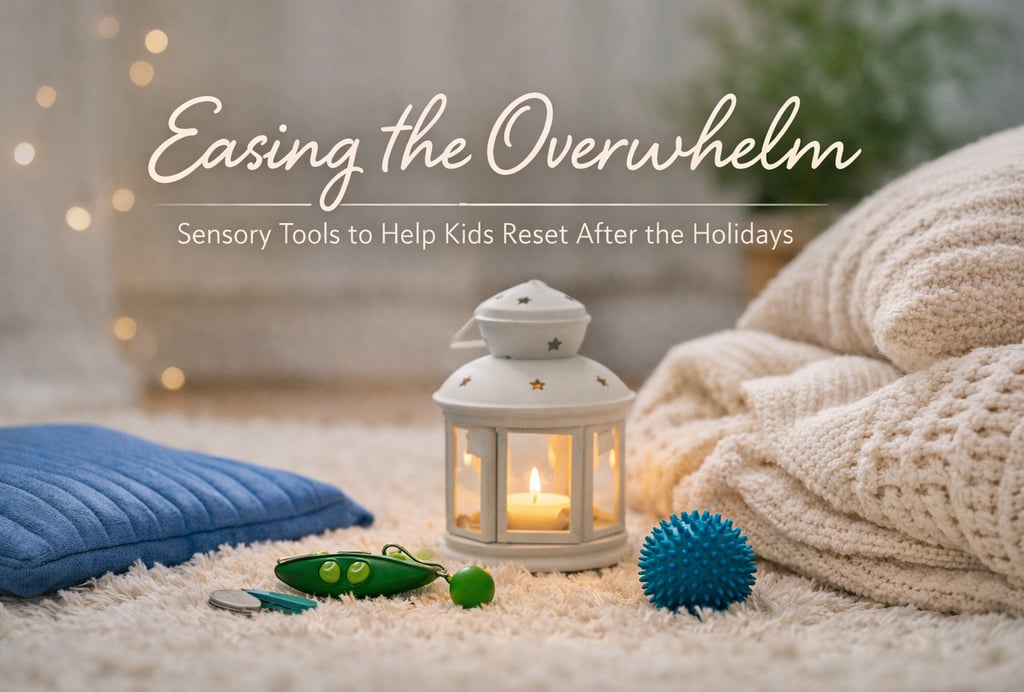
If you thought things would magically calm down once the holidays ended and instead your child seems more dysregulated than ever, you are not alone.
January has a funny way of sneaking up on us. The decorations come down, routines return, and yet somehow our kids’ nervous systems are still acting like it’s December 26th at a loud family gathering with no clear exit plan.
I remember thinking, Okay, the holidays are over. We should be good now.
My child did not get that memo.
If your days still feel loud, emotional, or unpredictable, this post is for you.
Why kids can feel more overstimulated after the holidays
The holidays bring excitement, change, and constant stimulation. Lights. Sounds. Different schedules. Extra people. Extra expectations.
For autistic kids, including my non-verbal son, all of that sensory input does not simply disappear once January arrives. It lingers.
Their nervous systems need time to reset, and sometimes they need extra support to feel safe and regulated again. This does not mean you are doing anything wrong. It simply means your child’s body is still processing everything it just went through.
And honestly… same.
A quick note before we talk about tools
Before I share these sensory supports, I want you to know they come from real life with my son, along with guidance from therapists and a lot of trial, error, and learning along the way.
Some of these worked quickly for us. Some took time. Some were a very clear “nope” within minutes.
Every child is different. What helps one child may not help another. I have linked each option to Amazon so you can explore them at your own pace, read reviews, and choose what feels right for your child and your home.
If you have been here before, you might notice that I often recommend some of the same types of sensory tools across different posts. That isn’t because I’m out of ideas. It’s because these supports tend to work for many families in different situations. Regulation looks similar whether it’s bedtime, after the holidays, or during busy days, and these are often the tools therapists suggest and parents return to again and again. I always encourage you to take what helps and leave what doesn’t.
My hope is that something here helps your days feel a little lighter.
Some of the links below are Amazon affiliate links, which means I may earn a small commission if you choose to make a purchase, at no extra cost to you. Thank you for supporting Sensory Cozy Corner. It helps me continue sharing gentle, honest resources for families like ours. 💚
Sensory tools that can help kids reset after the holidays
Weighted lap pads
When everything feels like too much, deep pressure can help the body settle.
A weighted lap pad has been one of our most-used tools, especially during transitions, quiet activities, or moments when emotions start to bubble up.
Affiliate link:
It offers steady input that helps the body feel grounded without being overwhelming.
Noise-reducing headphones
After weeks of extra noise, many kids need help finding quiet again.
Noise-reducing headphones can make everyday environments feel more manageable, whether it’s during schoolwork, outings, or busy afternoons at home.
Affiliate link:
If it reduces overwhelm and meltdowns even a little, that is meaningful.
Fidget tools or sensory kits
Hands often need something to do in order for the body to regulate.
Simple fidget tools can help release nervous energy and support focus during transitions back into routine.
Affiliate link:
Not every fidget will be a hit, and that is okay. Finding one that works can make a noticeable difference.
Indoor sensory swings or movement tools
After the holidays, many kids crave movement as a way to regulate their nervous systems.
Gentle swinging, rocking, or bouncing provides vestibular input that can help reset the body and release built-up tension.
Affiliate link:
Indoor sensory swing or movement tool
This was especially helpful for us on days when everything felt off and nothing else seemed to help.
Calm-down corner essentials
Sometimes kids just need a space that feels predictable and safe.
A calm-down corner might include soft cushions, sensory items, low lighting, or comfort tools that your child can return to when things feel overwhelming.
Affiliate link:
Calm-down corner sensory items
Think of it less as a time-out space and more as a place to regroup.
A gentle reminder for tired parents
If things still feel hard in January, please hear this.
You did not fail the reset.
You did not miss a step.
Your child is not behind.
Regulation takes time. Nervous systems do not follow calendars.
Some days progress looks like fewer tears. Some days it looks like one calmer transition. Some days, it looks like simply making it through the day together.
That all counts.
You don’t need everything, just what helps your child
You do not need to buy every tool listed here. You do not need to fix everything at once.
Start with one gentle support. Observe how your child responds. Keep what helps. Let go of what does not.
And if today still feels heavy, please know this. You are not alone. You are showing up with patience, love, and care, even when it feels exhausting.
From one mom to another, that matters more than you know. 💚