
When Your Autistic Child Won’t Sit Still: 7 Sensory Solutions That Actually Help (Without Constant Meltdowns)
If your child is always on the move, climbing, jumping, crashing, and you’re feeling overwhelmed trying to keep up… you’re not alone 💚 In this post, I’m sharing what sensory seeking really looks like in everyday life, and the gentle, real-life solutions that helped bring more calm into our home. These are simple tools and supportive ideas that can help your child feel more regulated, while making your days feel a little less exhausting and a lot more manageable.
4/14/20263 min read

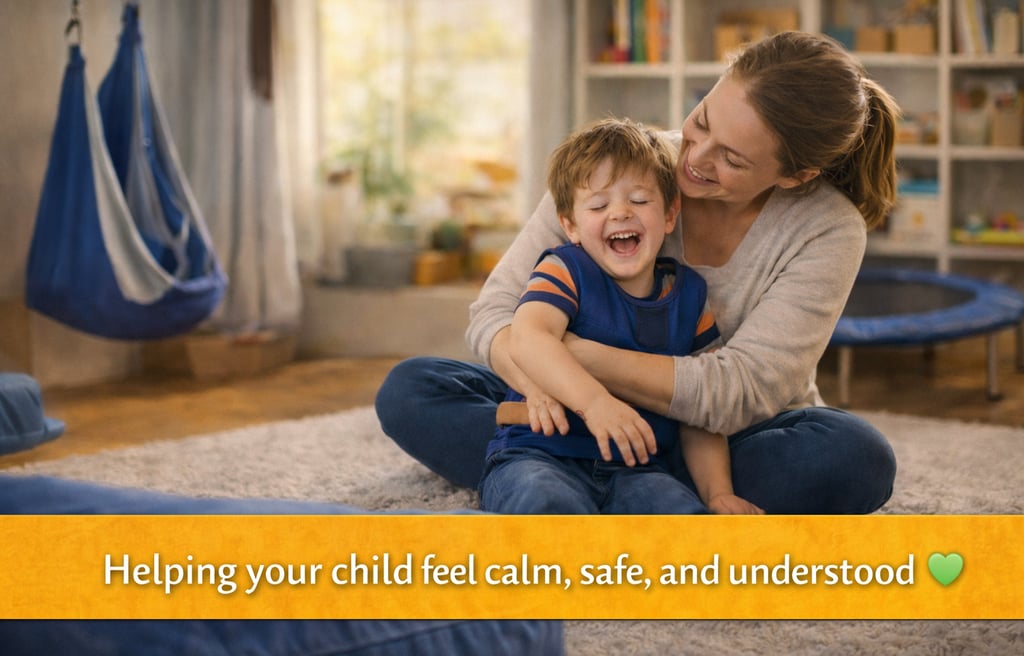
When your day feels like constant motion…
If your child is always moving…
Climbing the couch, jumping off things they probably shouldn’t, running back and forth, flapping, making sounds, crashing into pillows or even into you…
And you’re just sitting there thinking,
“How do I get even five minutes of calm?”
I see you.
Because I’ve been there too.
My son is non-verbal. He doesn’t speak, but he communicates in his own way. Sounds, stimming, hand flapping, movement. Lots of movement. Some days it feels like his little body just cannot slow down.
And for a long time, I thought…
Is this behaviour?
Am I doing something wrong?
Why can’t he just sit for a minute?
A gentle shift that changed everything
Here’s what I learned, and I wish someone had told me sooner:
👉 It’s not misbehaviour
👉 It’s sensory seeking
Their bodies are literally asking for input. Movement helps them feel regulated, safe, and balanced.
So instead of trying to stop the movement…
We redirect it.
And that’s when things started to change for us.
Not perfectly. Not overnight.
But enough to finally breathe a little.
Before we get into what helped us 💚
I just want to share this from my heart…
Some of the links in this post are affiliate links. That simply means if something here supports your child and you decide to explore it, I may earn a small commission at no extra cost to you.
Thank you for supporting my little cozy corner of the internet — it truly helps me continue sharing real-life, gentle support for families like ours 💚
What actually helped us (real-life, no fluff)
These are the tools that made a real difference in our home. Not perfect. Not magical. Just genuinely helpful.
💚 1. Sensory Swing (our biggest game changer)
There’s something about that gentle swinging motion…
It gives their body the input it’s craving in a safe, controlled way.
I noticed that after even 10 to 15 minutes, my son was calmer. Not completely still, but less frantic. Less overwhelmed.
If your child is constantly crashing, jumping, or seeking movement, this is a really good place to start.
👉 I’ve included a few sensory swing options here that parents are using to create a calming space at home
💚 2. Mini Trampoline (for the jumpers)
If your child is jumping on your couch…
This one is for you.
Instead of saying “stop jumping” all day long, I gave him a place where jumping was allowed.
And honestly? It reduced so many power struggles.
Now it’s more like,
“Go jump on your trampoline”
instead of “please get off the couch for the 47th time today”
👉 I’ve linked a few mini trampoline options here that are great for safe indoor movement
💚 3. Compression Vest (like a calming hug)
Some kids need deep pressure to feel grounded.
This is like giving their body a gentle, constant hug.
The first time I tried this, I didn’t expect much.
But I noticed he seemed more settled. Less all over the place. More comfortable in his own body.
👉 Here are a few compression vest options you can explore that provide that calming pressure
💚 4. Wobble Cushion (movement without leaving the seat)
If sitting still feels impossible for your child…
This helps them move while sitting.
It gives just enough motion that their body doesn’t feel restricted.
This was especially helpful during small activities like snacks or table time.
👉 I’ve added a few wobble cushion options here that can help with seated focus
💚 5. Crash Pad or Soft Landing Zone
If your child loves crashing into things…
Instead of trying to stop it, give them a safe place to do it.
We created a soft crash space at home and it made such a difference.
Less chaos. Fewer accidents. And honestly, fewer meltdowns.
👉 I’ve included a few crash pad options here that are perfect for safe sensory play
💚 6. Fidget Tools (small but powerful)
These are easy to overlook, but they help more than you’d think.
For moments when big movement isn’t possible, fidgets give that sensory input in a smaller way.
I keep a few around the house because you never know when you’ll need them.
👉 Here are a few fidget tool sets you can explore that are great for calming busy hands
💚 7. Weighted Lap Pad (for those slower moments)
When things need to slow down just a little…
This helps bring the body back to center.
It’s not magic, but it creates a sense of calm that wasn’t there before.
👉 I’ve linked a few weighted lap pad options here that can help with quiet time and regulation
🌿 When things start to feel a little easier…
If your days feel like a constant cycle of movement and overwhelm…
You are not alone.
And you are not doing anything wrong.
Some of our kids just need more input, more movement, more support to feel okay in their bodies.
Once I stopped trying to “fix” the behaviour
and started supporting what he actually needed…
Things softened.
Not perfect.
Not quiet all the time.
But calmer.
More manageable.
More connected.
And sometimes, that’s everything 💚