
Why Autistic Kids Struggle With Sleep — and the Sensory Tools That Actually Help
If bedtime is a struggle for your autistic child, you’re not alone. Discover why sleep is hard and the gentle sensory tools that actually help kids settle.
2/6/20264 min read

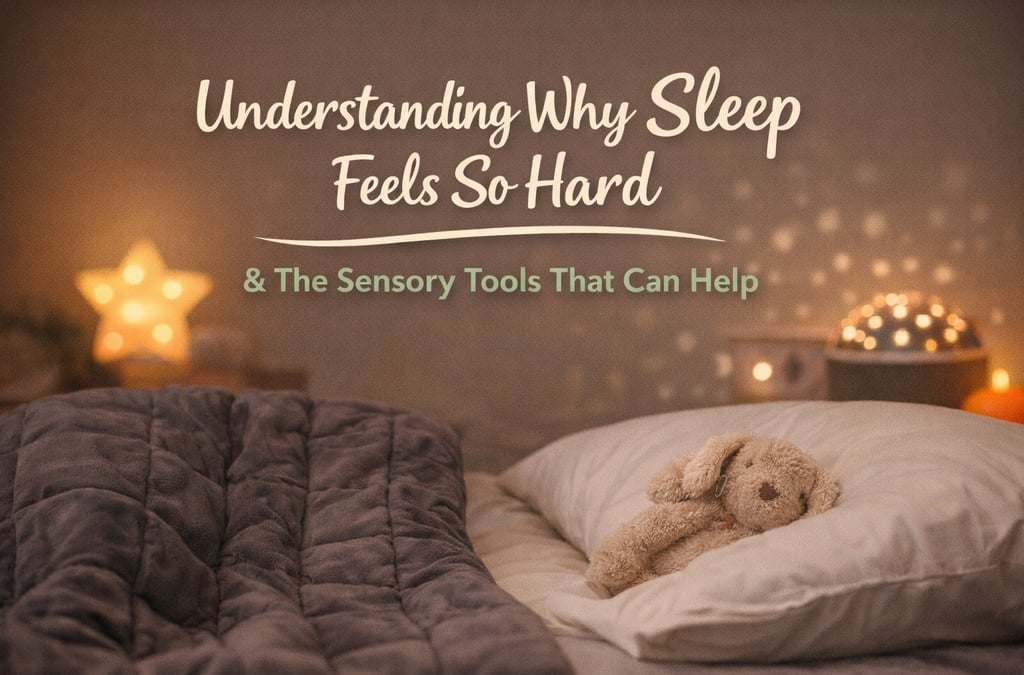

If bedtime feels harder than the entire day combined, you’re not imagining it.
And no… it’s not just your house.
When your child is autistic, sleep can feel like this nightly puzzle that never quite clicks into place. You dim the lights. You follow the routine. You whisper instead of breathe. You tell yourself tonight will be the night.
And somehow, it’s 2 a.m., your child is wide awake, and you’re mentally replaying every parenting decision you’ve ever made.
I’ve been there. Many nights, I’m still there.
Autistic kids don’t struggle with sleep because they’re stubborn, manipulative, or “doing it on purpose.” They struggle because their nervous systems are working overtime, especially when the world finally goes quiet.
Let’s talk about why sleep is so hard… and what actually helps.
Why sleep can be so difficult for autistic kids
For many autistic children, nighttime doesn’t feel calming.
It feels louder.
When the house settles down, their brains and bodies don’t automatically follow. Sensory input that might fade for others can suddenly feel magnified. The hum of a heater. The feel of pajamas. The weight of the blanket. Even silence itself can feel unsettling.
Some common reasons sleep is difficult include:
• Sensory processing that doesn’t “turn off” at night
• A nervous system that stays on high alert
• Difficulty transitioning from stimulation to stillness
• Anxiety around unpredictability or change
• Differences in body awareness, like temperature or pressure
In simple terms, their bodies don’t feel safe enough yet to fully relax.
And if your child has had a sensory-heavy day (which, let’s be honest, is most days), bedtime can feel like asking their nervous system to do something it’s not ready for.
The connection between meltdowns and sleep
This part is important.
Overstimulated days often lead to dysregulated nights.
And poor sleep almost always makes the next day harder.
It becomes a loop.
Meltdowns during the day can make bedtime chaotic, and rough nights can increase meltdowns the next day. This doesn’t mean you’re doing anything wrong. It means your child’s nervous system hasn’t had enough time or support to reset.
(If you’ve already read my post on what actually helps autistic kids calm down during meltdowns, you will notice how closely these two topics are connected.)
A quick honest note before we talk about tools 💚
You may notice that some of the sensory tools mentioned below are the same ones I’ve shared in other posts.
That’s intentional.
When something truly helps regulate our kids’ nervous systems, it often shows up in more than one area of life. Meltdowns, sleep, transitions, emotional regulation. These tools aren’t magic, but they’re effective because they support the same core need: helping our kids feel safe and grounded in their bodies.
Also, a gentle transparency note before we continue:
Some of the tools I mention below are affiliate links. This simply means that if you choose to explore them, I may earn a small commission at no extra cost to you. There is absolutely no pressure to purchase anything. I only share tools that have genuinely helped families like ours.
Thank you for supporting my little cozy corner of the internet. It allows me to keep sharing real-life, gentle support for parents who are just trying to get through bedtime with a little more calm.
Sensory tools that actually help with sleep
Not every child needs every tool. Think of this as a menu, not a checklist.
Deep pressure and a sense of safety
Deep pressure can be incredibly calming for many autistic kids. It helps the body understand where it is in space and sends a signal of safety to the nervous system.
Weighted blankets or weighted lap pads
These provide grounding pressure without needing constant physical input.
Compression sheets
These fit snugly over the mattress and offer gentle, even pressure throughout the night.
Sound sensitivity support
For some kids, silence isn’t soothing. It’s uncomfortable.
White noise or brown noise machines
These soften sudden sounds and create a consistent, predictable sound environment.
That steady background sound can help the brain stop scanning for danger.
Visual comfort at bedtime
Bright or harsh lighting can keep the nervous system alert long after lights-out.
Warm amber night lights
These provide comfort without overstimulation.
Low-movement star projectors
If your child enjoys visuals, slow and gentle movement is key.
Calming bedtime routines
Sometimes the most helpful “tool” isn’t a product at all.
A predictable routine, familiar textures, or a small bedtime sensory basket can help signal safety and consistency. The goal isn’t perfect sleep. It’s a calmer transition into rest.
What helped us (and what I wish I knew sooner)
For a long time, I believed bedtime had to look a certain way. Quiet. Still. Peaceful.
What actually helped was letting go of pressure. Releasing the idea that my child should be asleep by a certain time. Accepting that some nights would be harder than others.
When I focused on regulation instead of forcing sleep, nights slowly became easier. Not perfect. Just easier.
And honestly, easier counts.
If bedtime still feels heavy
Please hear this.
Sleep struggles do not mean your child is broken.
And they do not mean you are failing.
Some nights are still long here too. And that’s okay.
You’re doing the best you can with the energy and information you have. And that matters more than perfect sleep ever will.